Bedding guide
Choosing a Mattress Topper Supplier: Materials, Fit, and Care
A mattress topper can change the feel of a bed, add a little cushioning, or help shield the surface from everyday wear. But choosing one starts well before checkout. A dependable mattress topper supplier should make the important details easy to find: what the product is made of, how it fits, what it is meant to do, and how to care for it once it is home.
That clarity matters because “topper,” “pad,” and “protector” are sometimes used loosely, even though these bedding layers have different jobs. Read the specifications, compare materials with your own comfort priorities in mind, and check the measurements against your mattress. A considered choice can make the bed feel more suited to you; a rushed one may leave you with a layer that shifts, sleeps warmer than expected, or asks for more maintenance than you want to give.
First, decide what you want the layer to do
Before comparing a supplier’s selection, pinpoint the problem you hope to solve. Is the mattress surface too firm? Would you like extra cushioning? Are you mainly looking to protect the mattress from spills and routine soiling? These are related concerns, but they do not necessarily call for the same product.
A topper is generally chosen to alter the surface feel, often by adding a more noticeable comfort layer. A mattress pad may offer lighter cushioning while also helping protect the bed from ordinary wear. A protector is primarily a barrier against spills, dirt, or other unwanted contact, although some designs add a little softness. Product names alone do not tell the whole story, so look for details about fill, thickness, construction, and stated function.
Think about what you can change and what you cannot. A removable layer may help adjust the feel at the surface, but it does not replace the mattress’s support structure. If a mattress is badly sagging or no longer comfortable overall, a thin pad may not resolve the underlying issue. Being realistic about the job at hand helps prevent a purchase based on a promise the product was never designed to fulfill.
- For a softer surface: compare the layer’s filling, loft, and thickness, then consider whether that amount of cushioning suits your preference.
- For protection: check whether the product is described as water resistant or waterproof, and verify how it fits and how it should be washed.
- For a modest comfort change: a quilted pad may be more appropriate than a thick topper, depending on the construction and the feel you want.
Clear suppliers explain these distinctions instead of relying on language such as “ultimate comfort” to do all the work. When the intended use is specific, it becomes easier to compare similar products rather than weighing unrelated options against one another.
Read the materials, not just the headline
Material names can suggest a general feel, but construction and personal preference make a difference. Check both the filling and the cover: together, they shape the layer’s softness, breathability, texture, weight, and care needs. A supplier should identify the components clearly rather than leaving you to infer them from a product title.
Cotton: familiar, breathable, and easy to understand
Cotton is commonly used in covers and quilted bedding. It can offer a soft, familiar surface and is often selected by people who prefer natural-fiber fabrics. Its actual feel depends on the weave, quilting, and any fill inside the product. A cotton cover does not automatically mean the entire pad or topper is made of cotton, so check the full materials list.
Care instructions are especially useful here. Some cotton bedding is machine washable, while other items may have restrictions based on their construction or filling. Check the label before assuming that a natural-fiber product can go through a regular wash routine. If you want something for frequent washing, compare the instructions and care limits before buying.
Wool: cushioning with a different kind of feel
Wool is used as a filling in some mattress pads and toppers. It is often valued for its soft, cushioned feel and its ability to manage moisture, though the experience depends on the product’s weight, quilting, and surrounding fabric. Some people enjoy wool’s natural texture and warmth; others prefer a smoother or lighter layer.
Care is a particularly important part of the comparison. Wool-filled bedding may have more specific cleaning requirements than a straightforward cotton pad, and some products call for spot cleaning or professional care. The supplier should say whether the item is washable, whether it needs special handling, and what to do after a spill. A material that sounds appealing is not a practical fit if its upkeep does not suit your household.
Down alternative and synthetic fills
Synthetic fills can be designed to add loft or a plush, cushioned feel. Some are intended to mimic the softness of down while offering a different material choice. These products vary considerably: one may feel light and airy, another denser or more structured. Check the stated fill content, quilting pattern, and thickness rather than assuming that all synthetic options perform alike.
Blended constructions are also common. A product might have a cotton cover and a polyester fill, for example. Neither label tells you whether the layer will feel right on your bed, but knowing the ingredients allows a more grounded comparison and can help you spot care restrictions or material preferences that matter to you.
Latex and other resilient materials
Some bedding layers use latex, which generally feels more responsive than a fluffy, compressible fill. If you are considering a latex product, find out whether the material is solid or shredded, how thick the layer is, and what the cover contains. Certifications should be described precisely and should apply to the relevant material or product, not simply appear as a broad, unexplained claim.
Whatever material catches your attention, look for details that answer practical questions: What is inside? What covers it? Is the cover removable? Can the item be washed? Are there materials you want to avoid? If the answers are missing, contact the supplier before placing an order. A useful response should be direct and specific.
Make sure the measurements match your bed
A good material choice cannot compensate for a poor fit. Start by confirming the mattress size—twin, twin XL, full, queen, king, or California king—and compare it with the supplier’s listed dimensions. Names can be familiar while sizing details still vary, so treat the measurements as more than a formality.
Next, measure the mattress depth, including any existing mattress pad or other layer that will remain underneath the sheet. Then check the product’s pocket depth, elastic skirt, corner straps, or other attachment details. A fitted design needs enough depth to sit securely without being stretched to its limit. A flat design may rely on corner bands or another method of staying in place. Understand how the product is meant to attach before deciding it will work on your particular bed.
Account for the full stack. A deep mattress combined with a thick topper and a pad can challenge a fitted sheet, even when each separate item seems to fit. Consider whether the sheet will still have enough depth and whether the finished surface will stay smooth. On an adjustable bed, confirm that the layer is suitable for the way the base moves and that its attachment system can keep it from shifting.
- Measure mattress length, width, and depth rather than relying only on the size printed on a tag.
- Check whether listed pocket depth refers to the mattress alone or includes an allowance for bedding layers.
- Look for elastic around the full edge, fitted sides, or corner straps, and consider which style suits your setup.
- Review the supplier’s return and exchange terms in case the size or fit is not right.
A supplier that publishes clear dimensions makes this step much easier. If the information is incomplete, ask for the maximum mattress depth and the actual product measurements. Avoid treating phrases such as “deep fit” or “universal fit” as substitutes for numbers.
Compare thickness and construction with care
Thickness is one of the most visible specifications, but it is not a complete measure of comfort. A lofty-looking layer may compress under a sleeper, while quilting can distribute fill differently across the surface. The same stated thickness can feel different depending on the density and type of material, the stitching, and how the product is secured.
Ask whether the supplier describes the layer as primarily protective, lightly cushioned, or intended to make a more noticeable change to surface comfort. If the description is vague, look for a more detailed construction breakdown or ask a question before ordering. It can also help to consider the person using the bed: body size, sleep position, preferred firmness, and sensitivity to heat or texture all influence what feels comfortable. No single thickness or fill works for everyone.
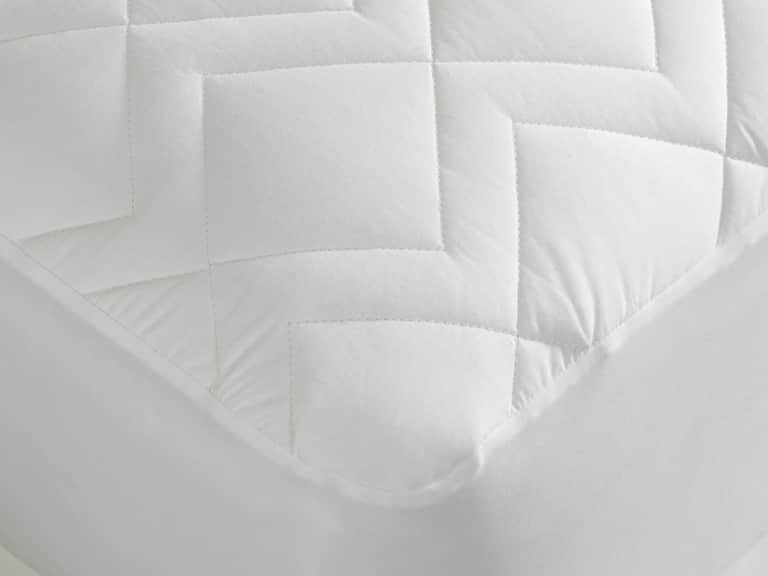
For a practical example of the difference between a protective pad and a substantial topper, the DownTown Company Waterproof Quilted Mattress Pad is described as a cotton-covered, quilted layer designed to combine everyday protection with a cushioned surface. Its product details list a double-diamond quilt, elasticized deep-fit pocket, standard mattress sizes, and machine-washable care. Those specifications make it possible to assess the pad’s purpose and fit; they do not make it interchangeable with every thick comfort topper.
When reviewing a product like this, focus on what its description actually promises. A waterproof feature may be useful for protection, but it does not tell you how much the surface feel will change. Quilting and fill information help explain comfort, while pocket depth and dimensions help determine whether it will stay in place. Separating those questions leads to a more informed choice.
Use care instructions as a buying filter
Maintenance is not an afterthought; it is part of the product’s everyday value. A layer that fits your comfort needs but is difficult to clean may be frustrating in a busy household. Before buying, look for washing temperature, drying instructions, bleach or detergent restrictions, and whether the product should be spot cleaned or professionally cleaned.
Do not assume the filling and cover share the same care routine. A removable cover may be washable while the insert is not. A quilted construction may need gentle handling to prevent bunching or damage. If a supplier says “machine washable,” check whether that applies to the whole item and whether a household machine can accommodate its size. Large bedding can be difficult to wash and dry evenly at home.
For a spill, follow the manufacturer’s directions promptly. Avoid applying heat or strong cleaning products unless the care label permits them. When an item needs to dry fully, give it enough time before placing it back on the mattress; trapped moisture can leave bedding unpleasant and may affect the underlying surface. Routine care should follow the written instructions, not assumptions based on a similar-looking item.
A mattress protector or pad can help reduce routine exposure to spills and soiling, but it is not a substitute for cleaning the mattress according to its own care instructions. Likewise, a topper may need a separate cover or protector if its materials are not designed to be washed. Think through the whole arrangement—mattress, topper or pad, protector, and sheet—so that each layer has a clear role and a manageable cleaning plan.
How to evaluate a mattress topper supplier
The supplier’s product page can tell you as much about the buying experience as it does about the bedding. Look for a full materials list, measurements, thickness, construction details, care instructions, and an explanation of intended use. Strong product information makes comparison possible without asking you to rely on an attractive name or an expansive comfort claim.
Also review the policies that apply after purchase. Find out how returns work, whether opened bedding can be returned, who pays return shipping, and whether a product has a warranty. Check delivery estimates and how the supplier handles damaged or incorrect orders. These details matter because bedding is personal: even a thoughtfully researched choice may not feel right once it is on the bed.
Customer feedback can add context, especially when reviewers discuss fit, texture, washing, or how the layer behaves over time. Give more weight to specific observations than to a string of generic praise. A review saying that a fitted skirt accommodated a mattress of a particular depth is more useful for fit than a broad declaration that the product is “perfect.” Reviews are individual experiences, not guarantees, so use them alongside the specifications.
If you contact a supplier, ask concise, product-specific questions. For example: “Will this fitted pad accommodate a mattress that is 15 inches deep with a thin protector already in place?” Or: “Can the complete item be machine washed, including the fill?” A reliable response should address the question without substituting unrelated marketing language. Save the answer if it affects your purchase decision.
- Specificity: Are materials, measurements, and care instructions easy to locate?
- Consistency: Do the product title, description, and specifications tell the same story?
- Transparency: Are certifications or performance statements explained clearly and accurately?
- Policies: Can you understand return, warranty, shipping, and damage procedures before ordering?
- Support: Can you get a clear answer to a practical question about fit or care?
These checks do not require a supplier to have the widest selection or the most elaborate sales pitch. They help reveal whether the information is sufficient for you to make a confident, independent decision.
A quick comparison checklist
When you have narrowed the options, put the details side by side. This simple comparison can stop a small but important difference from disappearing among product descriptions.
- Purpose: Is it designed to add cushioning, alter surface comfort, protect the mattress, or combine several functions?
- Materials: What are the fill and cover made of? Are any blends or treatments specified?
- Feel: Is the layer described as plush, responsive, light, or firm? What construction details support that description?
- Dimensions: Does the size match your mattress, and will the attachment fit its depth?
- Care: Can the whole item be washed? Are there special drying, spot-cleaning, or professional-care requirements?
- Policies: What happens if the product does not fit or does not meet your expectations?
Writing down your must-haves can make the final decision less complicated. You might prioritize an easy-wash surface, natural fibers, quiet waterproof protection, or a secure fit on a deeper mattress. Once those priorities are clear, a product that matches your actual needs is easier to recognize—even if its description is less dramatic.
Common mistakes worth avoiding
Buying by name alone. “Topper” and “pad” are not precise measures of thickness or function. Read the specifications and check how the supplier describes the item’s intended use.
Assuming natural means low maintenance. Cotton and wool have distinct properties, but care requirements vary by construction. Confirm what cleaning is allowed before you decide.
Ignoring the mattress depth. A familiar size label does not guarantee a fitted layer will sit securely. Measure the mattress and include any bedding layers that affect the fit.
Expecting a protective layer to transform the bed. A pad may provide some cushioning, but its main purpose could be protection. If a significant change in surface feel is your priority, seek a product described and constructed for that role.
Overlooking the care label until after delivery. Cleaning instructions shape whether a product will be convenient in daily life. Read them before buying, particularly if machine washing is important to you.
Treating every claim as a guarantee. Terms such as “cooling,” “luxury,” or “supportive” can mean different things across products. Look for concrete materials and construction details, and keep expectations realistic.
The bottom line: choose the details that fit your bed and routine
A reliable mattress topper supplier makes comparison straightforward. It tells you what is in the product, what the layer is meant to do, how thick it is, how it attaches to the mattress, and how to keep it in good condition. Those practical details are more useful than a polished product name because they let you match the bedding to your own preferences and household routine.
Begin with the reason you want a new layer. Compare cotton, wool, synthetic, latex, or blended materials according to feel and care—not assumptions. Measure your mattress, check the attachment style, and think about how the added layer will work with sheets and protectors. Finally, review the supplier’s policies and ask questions whenever a key detail is missing.
The right choice is not necessarily the thickest, most expensive, or most highly praised option. It is the one whose materials, fit, function, and upkeep make sense for your sleep setup. With clear information and a little careful measuring, choosing a mattress topper or pad can feel less like guesswork and more like a practical upgrade to the bed you already have.