Adjustable beds use a powered base to change the angle of the mattress, helping sleepers personalize their position for rest, reading, or watching television. Unlike a fixed bed frame, an adjustable bed can support different upper- and lower-body positions, making its movement and compatibility with the mattress important considerations within a bedding setup.
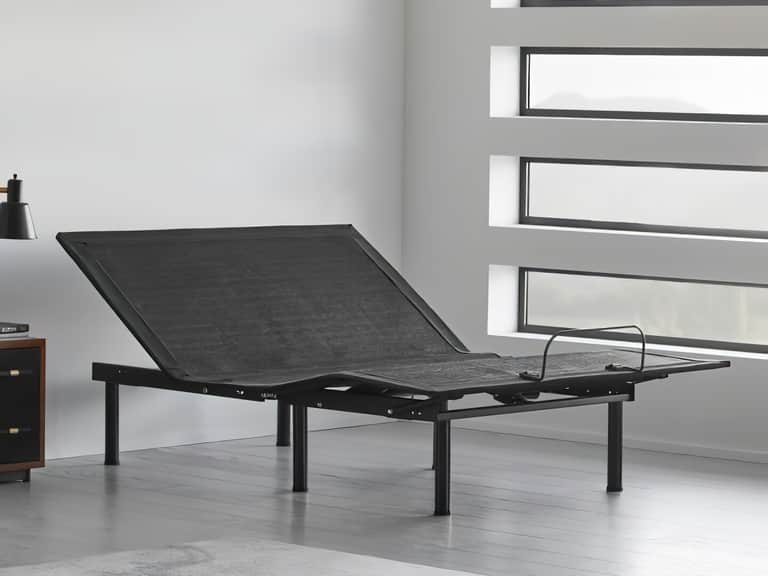
The Malouf E255 Adjustable Bed Base features adjustable head and foot sections, allowing users to raise the upper body, elevate the legs, or combine both movements. Its wireless remote provides convenient control of the base, while position adjustments offer flexibility for different routines and comfort preferences. Mattress compatibility should be checked before pairing any adjustable base.
Adjustable positioning may help users find a comfortable posture for activities such as reading in bed or resting with the head elevated. Raising the legs can also create a different support angle for relaxation. These functions are personal comfort features, not medical treatment, and individual needs vary; mattress and base instructions provide guidance for safe, suitable use.
Mattress construction affects how well a bed responds to articulation. Flexible foam and latex mattresses are commonly considered for adjustable bases, while some innerspring designs may also be compatible when specified by the manufacturer. Organic mattresses can differ in materials and structure, so certifications, flexibility, and base requirements matter when selecting bedding for an adjustable frame.
Comfort depends on the complete sleep setup, including the base, mattress, pillows, and bedding. Pillows can help support the head and neck as the bed angle changes, while fitted sheets should accommodate movement and mattress depth. Families considering organic crib mattresses should note that these are designed for infant sleep spaces, not adult adjustable beds.
 Adjustable Beds